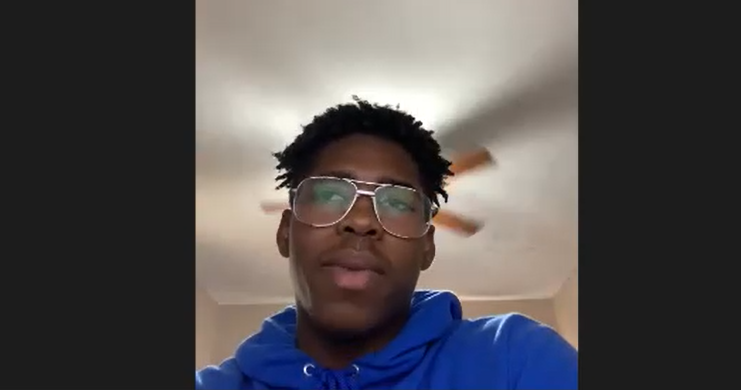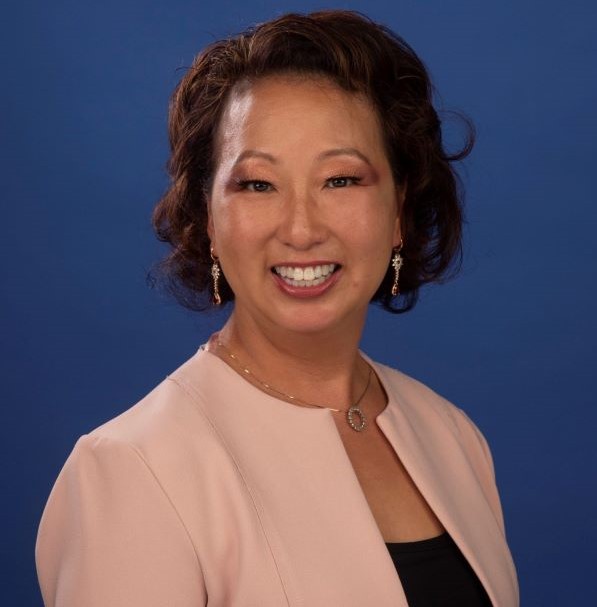
From a virtual celebration at a socially distanced watch party at McKean High School, Kimberly Stock was named the 2021 Delaware Teacher of the Year last fall.
Stock, an English learner teacher, also teaches AP Literature and Composition and eleventh grade English language arts—all while managing the language acquisition plans for more than 160 McKean students. She executed a new program and curriculum that serves more students with rigorous grade-level material resulting in 100 percent of McKean’s English learners graduating in 2020. She continues to provide regular professional development to McKean staff about EL teaching methods.
We spoke to Stock about her emerging advocacy plans, and how Delaware can better support EL students in the COVID-era.
[Read: Rodel’s English Learner Fact Sheet series]
How did it feel to become Delaware’s 2021 Teacher of the Year?
It’s absolutely crazy to me. I was surprised to find out from my building that I was nominated, surprised to win that, surprised to be a finalist for Red Clay, surprised to win that. And then just really surprised to be the Delaware Teacher of the Year, because I don’t necessarily know or think that I do anything that’s any different or special from any good teacher. I just think that maybe I, over the years, have learned how to not be as afraid to speak up for myself and my students.
Where did the spark for teaching come from in you? Was that something that was there from an early age, or did it kind of accumulate along the way?
My spark for teaching really occurred because an English teacher that I respected, who was the first teacher to bring in authors who were diverse (like Maya Angelou’s “I Know Why the Caged Bird Sings”), was the person who told me that I should be an English teacher. I would not be here unless she said that and I wouldn’t have known how important it is to have a curriculum that speaks to students. But when I reflect back, it took many years for me to become a good teacher.
I have been able to realize that good teaching meant you were working an insane amount, and then trying to somehow motivate students to meet you somewhere with that work. That takes an immense amount of creativity, an immense amount of planning. But before all that, it takes an immense amount of you being really vulnerable in the classroom, just as a human, because I’m literally asking teenagers to like me.
Those feelings of inclusiveness and honesty—do you carry those with you and then sort of sprinkle them out there to your students, hoping that they’ll kind of pick up the same sort of spark?
Oh my gosh, yes. Talking to my students through Zoom is such a strange thing because I really feel like I’m talking to a wall. But even so, I still talk to my students about the importance of who they are. I’m a person of color and I don’t take it lightly that I am one of few Delaware Teachers of the Year who is a teacher of color. I don’t take that for granted that I’m the first Asian Teacher of the Year in the state of Delaware.
Tell us more about your students.
Most of the students that I teach are English learners because I am an English learner teacher. But I also teach the AP lit class too as well. I will tell you that at our school, our English learners represent about 17 percent of the student body and it’s growing every year. Most of them, with the exception of a handful, are from Spanish speaking households. Most of them have been an English learner since kindergarten, most of them were born in The United States. And we do have a small minority of students who are recent arrivals into the country.
Most of our English learner students are students who have struggled, they cannot pass the access test, which is the test that we give them every year. By the time they get into high school, a lot of them stop trying to pass out of it because they couldn’t before. And our students at McKean, 70 percent of them are students of color. It’s a Title I, Title 3 universal feeding school, so by and large our students, I don’t like to use this term, but yes and economically, they come from lower socio-economic backgrounds.
How has COVID-19 complicated things?
A lot of our students will Zoom into class, but they’re working. Wednesday is an asynchronous day. They’re supposed to have assignments from every class and we have a Zoom advisory meeting. But some students are working that day. A student just told me today that he works with children at the LACC, but he balances school with his job. He starts the morning at the LACC, he attends his Zoom classes and then in the afternoon, he continues to work at the LACC. To me, these seem like really difficult schedules to try to manage, to be honest.
Our students have talked about either their families getting COVID-19, themselves getting COVID-19. The stresses, and the lives, and the loss that they have experienced is so much more than what I have experienced, or what my own two daughters have experienced. And I mean, certainly we’ve all experienced loss and grief, but it is very different. It’s very different for my students.

Delaware is one of few states that doesn’t provide extra per-pupil funding to English learner students, who, research attests, require additional resources to succeed. What was your introduction to these sorts of inequities that are baked into Delaware policies?
Before I started teaching high school English learners, I actually worked at nonprofit, the Claymont Community Center and I ran, and developed, and grew adult education programs. And through there I was able to see that the funding and the difficulty of trying to get funding to run these just needed programs.
These programs are serving our poorest and most vulnerable population. So just kind of seeing that a lot of structural change, funding, that was an area that definitely needed to be addressed and it was hard. And then of course when I got the job at McKean and you kind of have this hope, okay, there’s money in the public system. And I thought I would kind of come into a situation where a lot more resources would exist. I will say that in my school, in my district, I was lucky to have more resources than others. But when I met other people from other states—a colleague from Virginia told me about how many EL teachers she had in her school. I realized that in order for us to have met the same ratio as what they do in a state like Virginia, we would have to have had three times as many teachers.
The problem is, there’s not one particular person or one particular entity, or anyone that you can necessarily blame. I mean, it’s not my building’s fault, it’s not my district’s fault.
We’ve already seen some beginnings of progress with Delaware’s Opportunity Funding, which allowed us to hire another teacher at McKean, and that’s huge. But of course, it’s not just in hiring teachers, it’s also in teaching the existing teachers how to better serve and teach our English learners.
How do these inequities tend to play out for students?
When I think about maybe the commonality that occurs with some of our students who have stopped coming to school, it is because they come from households where they have to work.
And that’s something that we have heard over and over again, “I got to work.” And it’s very difficult, obviously, for us to try to inspire and motivate a family or a 17-year-old student who just came from Ecuador last year and didn’t have a lot of time to learn English in school before we went completely remote anyway. It’s really difficult to convince them that ultimately the better route would be for that student to stay in school and to get their education. It’s hard.
Does it make things harder that Delaware doesn’t always provide the tools or resources they need to succeed?
The problem is that I don’t necessarily know if our families and students are aware of what rights they have as an English learner. By the time the students get into high school, they’re often surprised that there’s still an English learner. They have no idea why they have to take that access test every year, or why I’m in their classroom, until I tell them. But the reality is, is that yes, if every English learner could get even just a minimum, but really we want to do more than just the minimum, of their recommended services.
If we had in every building, a family advocate for those families, imagine what could be done for those families. And again, it’s a place to start. I don’t necessarily know that one advocate would be adequate for a building like McKean. But it is a place to start.
And these are things that have been recommended over and over again. It’s certainly not a surprise. It’s definitely something that everybody knows is a problem. But again, I really feel like in Delaware, we have an opportunity to be a leader here, we really do. Why do we want to be put on the side of the states that aren’t giving adequate services? Why do we want to be a state that is giving adequate funding? Why do we want to do that? Why don’t we want to be leaders in this area? Because it’s the right thing to do, quite frankly.
Besides revamping Delaware’s school funding system, are there other policies out there that we can start looking at that can help English learner students?
Yes, we can do two things. We can better educate our existing teachers, by having more professional development. In reality, everybody is an English learner teacher, it’s all of our responsibilities. It can’t be up to three teachers in one building and a bilingual para-educator. I mean, it can’t fall only on the shoulders of those people, or in some buildings, one teacher. That is an easy solve. There are people who can help, including me.
The other thing that can be another thing that we can do, is to require that new teachers seeking certification, that they take at least one three hour course about English learner methods. It could be a second language acquisition course. And again, we also know people who could step right up and teach those classes. So we could have teachers right from the gate, brand new teachers, who already have some strategies in hand. And that is also something that is being asked of them to do in student teaching, in practicum teaching. We, as veteran teachers, can help mold that too as well.
Your personal journey took you from South Korea to Nebraska, where I imagine you probably felt a bit like an outsider growing up. How did that shape your work today around advocating for your students, many of whom surely feel like outsiders in their hometowns as well?
I came to the states in the ’70s, so you can imagine what Nebraska was like for a Korean girl in the 1970s. Nobody thought about being politically correct. So it was a difficult time. I mean, I don’t even want to just say that I was teased; I was tormented, sometimes on a daily basis. And a lot of people, a lot of adults, a lot of teachers, they looked the other way. I realize that it’s not because they were intentionally training to be cruel, it’s because they just honestly just didn’t know better. I think they just thought, “Oh, that’s just what happens. If you’re different, then you’re going to get teased for that.”
And so yeah, it was always this feeling of being an outsider. And it’s definitely something that I relate to with my English learner students, that they too are often on the outside of everything. And especially as they’re learning English, they’re outside of even knowing what’s happening in class. And what a lonely and sad feeling that must be for my students and it’s definitely something that I can relate to. I hope that as well, that my students can kind of say, “Well, Mrs. Stock, she’s an immigrant, I’m an immigrant and perhaps I can kind of look to her experience,” to hopefully, maybe inspire them just a little bit, just let them know that they can do it.
What tends to surprise people about English learners in Delaware?
I think first and foremost that they don’t that English learners are entitled to certain protections, and to certain services guaranteed through federal law. That this is not a choice first and foremost as an educator, it is a mandate. So I think that, that is something that people are surprised by. It was something that I was surprised by once I started to become an English learner teacher.
And that it is so much harder for them and something like this just highlights the inequity that we have all around in society. And certainly, our students are a part of that. yeah, and I think that also, I think that teachers would be surprised that you can learn strategies on how to teach English learner students, and they’re not the same strategies as a special ed student. They are language goal oriented and just because a student was born in the states and has been an English learner student for 10 years, they also have language goals too. Of course, it looks differently. There’s no such thing as a student who’s not really an English learner student.
Also surprising is the fact that the majority of our EL students were born in America, 75 percent of them. But they’re still English learner students, and if we can meet their needs on a really comprehensive level when they’re younger, we will have fewer of them in high school.
How to you hope to use your platform as Teacher of the Year to inspire change?
My goal is to meet with every decision-maker, whether that be a lawmaker, whether that be school board members, whether that be other teachers…and get them to understand the things that we need to change in the state of Delaware to be better serve our English learners. And also part of my platform is to have schools that are anti biased, anti racist schools. I do think a lot of school districts are working towards that goal, it’s not easy of course. And neither is my goal for English learners.
This current situation [amplified by COVID-19] is not ideal for anybody. We’ve been asked to do the impossible, and by and large, we’ve stepped up.
It’s still not enough, and that’s where we’re really struggling, because we can’t continue to do the impossible without any help, without any support. And so I think now that I can do things through Zoom, I might miss out on the fun things, I might not go to space camp. I might not meet Joe Biden in person. But the more important thing is that I have a voice that apparently, people want to listen to at least once. And if you listen to me once, I am going to convince you about why we need to really put some systemic change in place for education.