A New Leader at a Critical Moment in Delaware’s Schools

As we remember the life and legacy of Martin Luther King, Jr., I find some of his words as powerful today as they were then. In the Morehouse College student newspaper in 1947, he wrote about what many parents, educators and employers are still wrestling with close to 80 years later.

“…Education must also train one for quick, resolute and effective thinking. To think incisively and to think for oneself is very difficult. We are prone to let our mental life become invaded by legions of half truths, prejudices, and propaganda…Education must enable one to sift and weigh evidence, to discern the true from the false, the real from the unreal, and the facts from the fiction.”

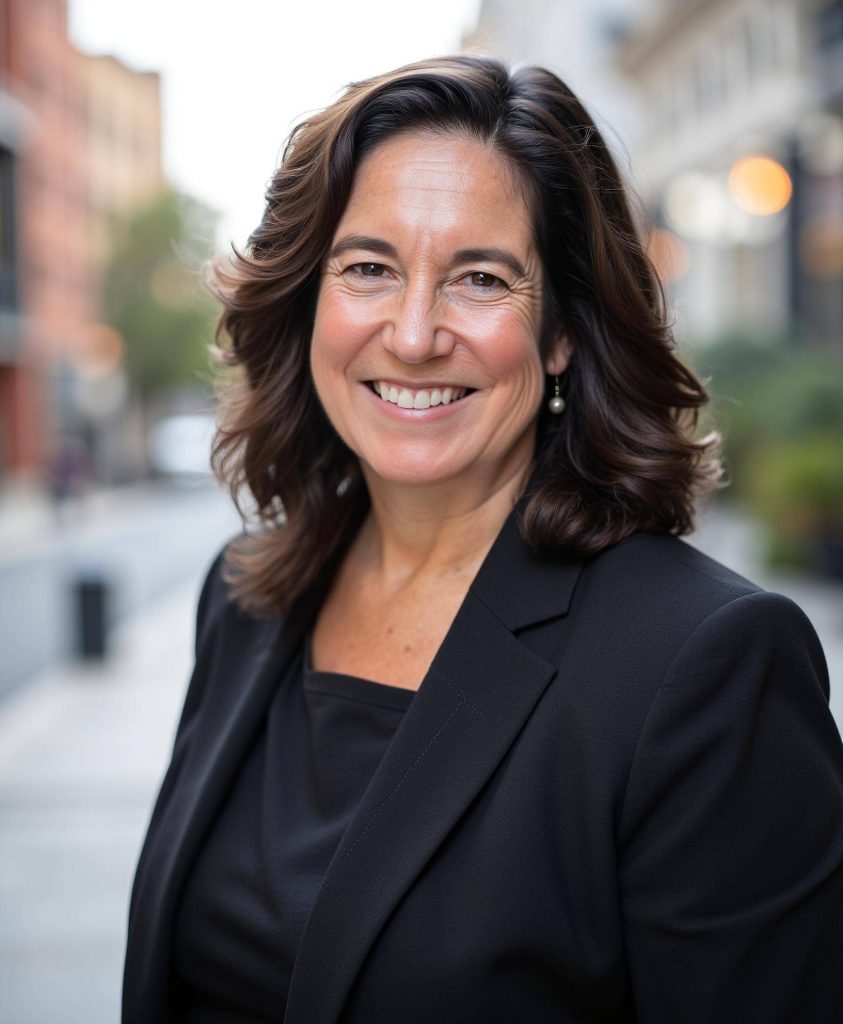
Growing up today is no easy task and as a state, we find ourselves at a critical juncture. With the appointment of Cindy Marten  as Secretary of Education, Governor Matt Meyer has strategically positioned our state to capitalize on this pivotal moment, setting the stage for meaningful progress in education.

Her track record of getting things done in San Diego (a district of 100,000 students) will transfer well to Delaware (a state of about 140,000 students)—especially when it comes to improving graduation and literacy rates and overall health (see  here). While moving Delaware’s 42 local education agencies (19 districts and 23 charter schools), each with their own boards and micro politics, is different than moving one district, I’m confident her track record in California and all she’s learned in her recent role as Deputy Secretary at the U.S. Department of Education, the second highest ranking education official in the nation, will serve her, and us, well in this new role. She has worked with the best educators in the country and seen what’s worked, and what hasn’t.

She will have some work to do. Much has been made of the drop in Delaware’s performance on state and national test scores that began before COVID and dropped precipitously since then (see here).

The good news is that, despite some real challenges, Secretary-Designate Marten will also have some strong assets to build upon, not the least of which is our collective ability to put our shoulder to the wheel with her.  The John Carney administration and the past two Secretaries, Susan Bunting and Mark Holodick, advanced public education in some significant ways. In the last several years:

  • More than 70 percent more children are being served in state-funded pre-K.
  • 30,000, or 65 percent of Delaware’s high school students are in career pathways getting a leg up on life with meaningful work experiences and access to post-secondary credits and credentials (at least 5X any state in the nation in terms of percentage engaged).
  • We have increased teacher salaries nine percent and implemented a multi-pronged “Grow Your Own” approach to teacher recruitment and retention. This work is already impacting over 800 future educators and creating pathways for many more, all with the goal of building a teaching workforce that reflects the diversity of the students we serve.
  • We are investing $60 million more in our low-income and multilingual learners and finally have a roadmap for redesigning our 80-year-old public school funding system.


As we consider how best to meet this moment, I encourage all of us to do what Delawareans do best, align and raise this collective “barn.” Our “Delaware Way” can be a powerful vehicle for working together to move on tough issues, or it can hold us back. Let’s work together to make the most of this moment.

Dr. King concluded that 1947 article, “We must remember that intelligence is not enough, intelligence plus characterthat is the goal of true education.”

Strengthening our public schools is not just about test scores or jobs, it’s about the foundation of our democracy and our communities.

Welcome Cindy, we look forward to your confirmation, and let’s get to work!

Affirming Our Commitment to Equity

As we collectively navigate the post-election landscape and prepare for the transitions at the state and federal levels, we at Rodel want to reaffirm our mission, objectives, and values and ask for your partnership in supporting our public schools.

For families, educators, and students—particularly those from marginalized communities who have historically shouldered the burden of systemic inequities—this moment may bring fear and uncertainty. The antidote to anxiety is action.

At Rodel, we are taking this opportunity to double down on our commitments to creating an excellent and equitable public education system that serves all Delawareans. Together, we invite your partnership to continue the work of building a future where every child has access to a quality education that supports their success in school, in work, and in life. So, what does this mean?

Our mission remains: To strengthen Delaware’s public education system and workforce by connecting partners to advance and implement sustainable solutions.

To achieve this, we are focused on these core priorities:

  • Expanding access to early childhood programs focused on the state’s highest-need learners
  • Improving educator diversity and retention to better serve Delaware’s students
  • Strengthening career pathways that connect students’ interests and skills to promising careers and life outcomes
  • Ensuring equitable funding that meets the needs of all students in Delaware


Historically, we have all seen that education can be both a door to opportunity and a tool of exclusion. We will keep that door open for all, particularly those who have been historically marginalized, including Black and Brown students, LGBTQ+ students, multilingual learners, immigrant students, students from indigenous communities, students with disabilities, and those from low-income and underserved communities. We recognize the immense value that these students bring, and we will do our part to support them and to ensure that their civil rights are protected. We also acknowledge the heightened stress and fears facing our immigrant communities statewide.

We look forward to aligning with local leaders and working with policymakers to ensure schools and community-based organizations are protected places as much as possible. We encourage individuals and organizations to Know Your Rights and work together during these turbulent times, and we encourage local education agencies to clearly communicate their policies to students, families and staff.

To advance our goals, we will:

  • Follow the evidence to develop transformative, data-driven solutions
  • Listen to the community to inform our work and build coalitions needed to ensure sustainable change
  • Champion public education as the bedrock of democracy, benefiting 90% of Delaware’s children today
  • Stay proactive and engaged, partnering locally and nationally to meet challenges head-on
  • Work with partners to share resources that protect children and families
  • Lead with empathy and compassion


We acknowledge the critiques of our public schools. We are clear-eyed about the work that needs to be done, and we embrace the urgency of this moment. We can and must do better. As new administrations take shape in Delaware and D.C., we remain steadfast and energized to work with all of you to reimagine what education can and should be. Public education is not only a foundation of our democracy—it is a reflection of the society we aspire to create.

We believe Delaware is a special place. We know how to work together, to get things done. We invite you to join us on this journey, and together, we can be a beacon for the nation.

Post-Election Analysis

A new analysis of the 2024 election’s potential impacts on education Education First is publishing a comprehensive analysis designed to help education leaders understand and prepare for the election.
Will Trump eliminate the federal role in education or weaponize it? Thomas B. Fordham Institute examines what might happen to the U.S. Department of Education under President Trump.

Early Childhood

Rapid Response Resources
A Guide to Creating “Safe Space” Policies for Early Childhood Programs Gives practitioners, advocates, and policymakers information and resources to design and implement “safe space” policies that safeguard early childhood programs against immigration enforcement, as well as protect families’ safety and privacy.
Civil Rights Principles for Early Care and Education (ECE). The Leadership Conference on Civil and Human Rights.   Ten principles aimed at ensuring equitable and inclusive early care and education systems
Early Intervention Services for Infants and Toddlers with Disabilities. Parent Information Center (PIC) of Delaware.  A guide detailing services available for young children with disabilities and their families

Educators

Avoiding the Discriminatory Use of Artificial Intelligence. U.S. Department of Education. Office for Civil Rights.  Guidance to educational institutions on preventing discriminatory practices when implementing AI technologies.
Resources from the Center for Black Educator Development.  Resources to build the national black teacher pipeline, advancing racial justice, and educational equity. 
Educator Resource Hub. The Immigrant Learning Center.  A carefully curated collection of resources to help you support your foreign-born students and educate all students about U.S. immigration. 

Postsecondary Success

LGBTQ+ Student Scholarship Database. Human Rights Campaign.  List of scholarships, fellowships, and grants available to LGBTQ+ and allied students.  
Students’ Free Speech Rights in Public Schools. ACLU.  Guide detailing the free speech rights of students within public schools.
LGBT High School Students. ACLU.  Information on the rights of LGBTQ+ high school students, focusing on protection against discrimination and harassment.
Know Your Rights: Trans & Gender Diverse Youth. ACLU. Guide outlining the rights of transgender and gender-diverse youth, including information on identity recognition and protection from discrimination.

Immigration

If Immigration Agents (ICE) Are at Your Door. ACLU.  Guide advising individuals on their rights and appropriate actions if approached by ICE agents at their residence.
Know Your Rights about DACA. ACLU.  Information on the DACA program, including eligibility, application processes, and current status.
Your one-stop hub for trustworthy resources on DACA and all things immigration. United We Dream. Browse and search resources by topic and type on all things immigration such as guides, articles, factsheets, reports, and livestreams. 
Beyond DACA: A Directory of Resources for Undocumented Students & Individuals. Higher Ed Immigration Portal.  A consolidated place for the most recent resources to support undocumented students and individuals’ access and afford college, start their professional careers, and receive legal support and mental health support, among other types of resources. These resources were designed by pro-immigration organizations in the non-profit sector.
Educational Resources for Immigrants, Refugees, Asylees and other New Americans. U.S. Department of Education.  Find K-12, higher education, DACA, adult education, migrant education, Hispanic, Asian American, and Pacific Islander student resources. 
Know Your Rights- Delaware Department of Justice, Attorney General Kathy Jennings Delaware Attorney General Kathy Jennings today announced the release of Know Your Rights on Immigration guidance providing vital information to individuals and organizations on their constitutional rights during interactions with federal immigration officials. This initiative reflects the Delaware DOJ’s commitment to public safety, the rule of law, and the dignity and rights of all residents — regardless of their immigration status.

Healthcare

Know Your Rights: Abortion Care in Delaware. ACLU.   Guide detailing the legal rights and available resources for individuals seeking abortion care in Delaware.
Healthcare Facilities Search: How do healthcare facilities near you measure up on LGBTQ+ inclusion? Human Rights Campaign.  Tool to assess healthcare facilities’ policies and practices regarding LGBTQ+ inclusion and equality.

Education

Know Your Rights: OCR Complaint Process, Sex Discrimination, Race and National Origin Discrimination, Age Discrimination, Disability Discrimination… U.S. Department of Education. Office for Civil Rights.   Overview of the Office for Civil Rights’ complaint process, including how to file complaints related to discrimination in educational institutions.
The Parent Information Center (PIC) of Delaware. & Parental Rights under IDEA. Center for Parent Information & Resources.  An overview of the Individuals with Disabilities Education Act (English and Spanish).

Policy

Declaracion de Derechos en Lenguaje Sencillo. ACLU. A simplified explanation of the Bill of Rights (Spanish).

Partner Contacts 

ACLU of Delaware 

Advocates for individual rights and liberties through litigation and public education.
Address: 100 W. 10th Street, Suite 706, Wilmington, DE 19801
Phone: (302) 654-5326
Email: Contact Form
Website: aclu-de.org 


Clean Slate Delaware Expungement Hub 

Provides assistance with the expungement process to help individuals clear their criminal records. 

Website: www.aclu-de.org/csde


Community Legal Aid Society, Inc. (CLASI) 

Offers legal services to low-income individuals, people with disabilities, and the elderly. 

Address: 100 W. 10th Street, Suite 801, Wilmington, DE 19801 

Phone: (302) 575-0660 

Website: declasi.org


Delaware Center for Justice 

Provides support services to justice-involved individuals and their families 

Address: 100 W. 10th St., Suite 905, Wilmington, DE 19801 

Phone: 302-658-7174 

Email: center@dcjustice.org 

Website: https://dcjustice.org/ 


Delaware Volunteer Legal Services (DVLS) 

Provides pro bono legal assistance to Delaware residents in need.
Address: 100 W. 10th Street, Suite 203, Wilmington, DE 19801
Phone: (302) 478-8680
Email: dvls@dvls.org
Website: dvls.org 


Parent Information Center (PIC) of Delaware 

Provides one-on-one support to help families understand their rights and navigate the special education process 

Address: 404 Larch Circle, Larch Corporate Center, Wilmington, DE 19804 

Phone: (302) 999-7394 

Email: picofdel@picofdel.org 

Website: picofdel.org 

Career Pathways in a Rapidly Changing World: Canada

Career Pathways in a Rapidly Changing World
This is part of a series of blogs about how policymakers and practitioners in five countries—Australia, Canada, New Zealand, Scotland and the U.S.—are supporting their young people in transitioning from senior secondary school or high school to the postsecondary path of their choosing. This project was carried out over the last year in partnership with the Organization for Economic Cooperation and Development (OECD) and with funding from the Carnegie Corporation and Rodel. Click here for more on this project. 
5 Lessons Learned from Canada’s Career Pathways

In the wake of the pandemic, the explosion of AI, and major shifts in their economy, Canada is engaging in innovative ways to prepare the next generation for the careers of their choice.

As context, Canada’s land mass is slightly larger than the U.S. and their diverse population of about 39 million people, is larger than Australia’s 26 million, and about eight times smaller than the 332 million in the U.S. In terms of how education policy decisions are made here, the country is divided into 10 provinces and three territories and when they were confederated in the Canadian Constitution Act of 1867, exclusive legislative responsibility for education was granted to those provinces and territories. That means Canada does not have a federal department of education.

Given that backdrop, the project team worked with our international advisors to identify two provinces that were doing innovative work in career readiness, and while there is good work happening across the country, we decided to focus on British Columbia (B.C.) and New Brunswick (N.B.). B.C. is on the west coast (population of about five million) and New Brunswick is on the east coast (population about 800,000). In preparing the working paper, our team completed a desk review of the policies and research and spoke with and surveyed over one hundred educators, policymakers, and students across the two provinces.

Five Takeaways. While the working paper goes into more depth on the range of approaches in the two provinces, and the podcast can provide more color from participants on the ground, this shorter blog is meant to provide five takeaways worth deeper exploration by leaders in other jurisdictions. (Any quotes that follow come from recorded interviews with the participants between April 2023 and February 2024.)

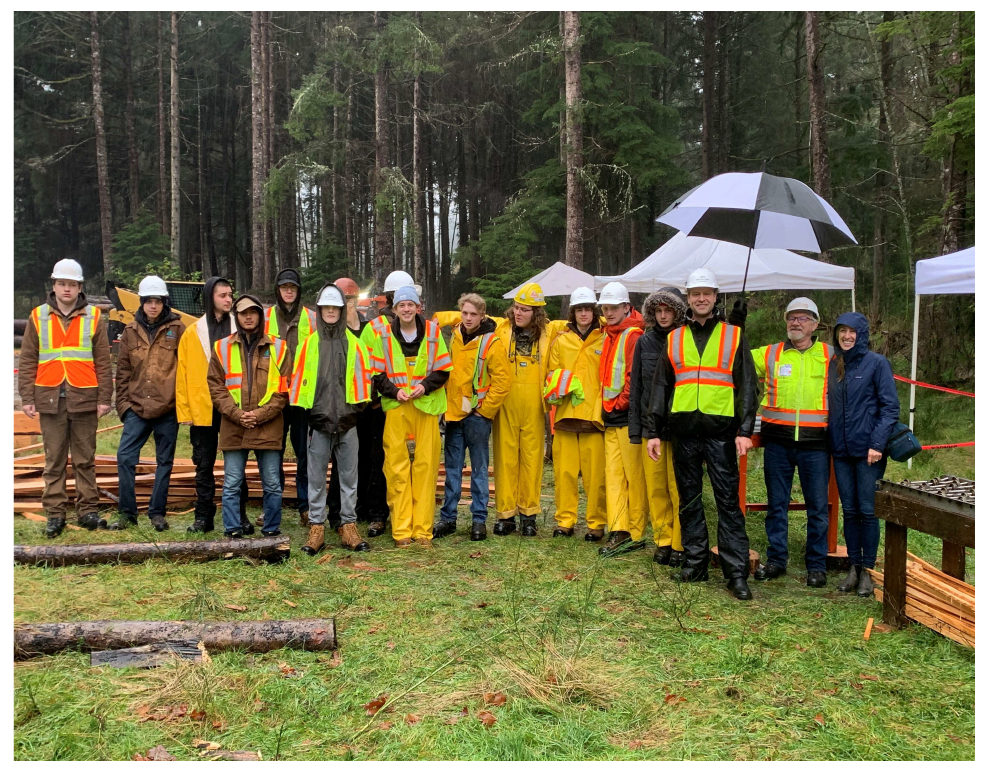
  • Set a vision for an “educated citizen.” Some 35 years ago, in 1989, policymakers in B.C. articulated a mandate for the school system focused on the development of the “educated citizen.”* The mandate laid out a definition which included three areas of development: intellectual, social-emotional, and career readiness. Just over 25 years later, the mandate continued to support curriculum transformation in B.C. Angie Calleberg, Executive Director for student learning in B.C., shared that through many roundtables with people across the province that they came to the realization that “an educated citizen” was still the goal for the school system. Through these community dialogues, they realized that the transformation of their curriculum had to transition from rote learning to students “being able to access information and to make sense of what they’re seeing in ways that are personally and socially responsible.” The process of engaging the community since 2011 was critical. Ms. Calleberg explained, “the hallmark of what we’ve accomplished together happened because of open and transparent processes and being able to bring in every single perspective that’s going to want to have a voice in those processes.”


  • Start earlier. Both B.C. and N.B. utilize career readiness curriculum frameworks that begin at kindergarten and go through senior secondary school. B.C.’s K-12 career curriculum can be found here and N.B.’s framework is linked here. Building early self-awareness about who and what one values makes sense, especially given how fast AI is moving, and the fact that many of the jobs that exist today will change or go away by the time a secondary school student graduates. When I spoke with Bonnie Alexander, the Career Education Coordinator for the Victoria School District, she explained that much of the work in the early grades was not about asking “what” they want to be and more about “who” they want to be. Much of her work was inspired by research. She shared, “Hands-on career education woven into the curriculum is a great platform for me to teach teachers how to bring that curriculum to life. Through research, we know that kids start to make assumptions about their suitability to work as early as age seven, so all the programs that I run are meant to interrupt that.”


  • Value work-integrated learning. In both provinces, secondary students can receive academic credit for working. In New Brunswick, a growing number of students are engaging in the Essential Skills Achievement Pathways (ESAP). This two-year program, started about six years ago, employs a mix of skills-based problem solving, project-based learning, and on-the-job experience. This is not an add-on to the curriculum; it is the core curriculum. Depending on a student’s future plans, they can prepare for postsecondary education, an apprenticeship, or direct entry into the workforce. All pathways require students to engage in experiential work-based learning, with the “Workplace Entry” pathway requiring a mandatory work placement of at least 400 hours. Beth Henderson, Learning Specialist in the Essential Skills unit of the N.B. Ministry of Education, and an architect of ESAP, shared that getting this real-life experience was critical to helping young people make informed choices. She said, “we did a survey of teachers and one of the most used lines was that ‘we want students to keep their options open’. That’s actually the worst career development advice you can give to kids. What they need to do is figure out their skills, talents, and abilities and align those to reality. That’s success; that’s when hopeful transitions happen.” In B.C., students must engage in 30 hours of a school-approved work placement or volunteer experience as a part of their high school experience, see Career Education 10-12 Guide for more. Students can also engage in Work Experience (WEX)12A and 12B, elective courses that can count for eight of the 80 credits required for graduation. While these experiences also need to be approved by the school and are tied into Ministry curricula and guidelines, they are largely about building real-life work experiences while in secondary school.


  • Embrace student agency. The two provinces approached this differently, but both were attempting to meet students where they were and provide more opportunities to help young people have agency over when, how, and what they learn. In B.C., beyond the exploratory work in the early grades, there is a range of consistent components related to career readiness at the secondary level. In addition to their 30 hours of work or volunteer experience, they must complete two courses: Career-Life Education and Career-Life Connections (in which students learn about everything from personal finances to preparing a CV) and a “capstone project” that provides students with an opportunity to reflect on what they’ve learned and how those lessons connect to life after secondary school. Students can customize their learning experiences. For some, that could be dual credit courses at Camosun College to get a head start on an apprenticeship or higher education, or it might involve a semester or two exploring a sampler of trades through the Youth Work in Trades (WRK) program. One student I spoke with in Vancouver explained that when he started high school, he struggled. He shared, “I thought I was going to be a troubled kid,” but getting involved in carpentry just clicked. As a 12th grade student on his way to his “red seal” or journeyman status, he shared, “I learned I’m not a sit-down- in-the-classroom learner. You’ve got to show me a few times, and I’ll get it. I learned how to learn, and now I’m way more independent.” For N.B., Beth Henderson explained that, “Essential Skills really allowed N.B. to recognize that we can do school differently… It has allowed students to really personalize. They realize that everything is done with reason and intention for them.” One ESAP student explained, “I think it’s a great process because everyone else my age that isn’t in Essential Skills is still looking for part-time jobs. They don’t know what they’re looking for at all. Essential Skills is great because it has given me a lot more comfort in the sense that I know what I’m doing. I know where I’m going. I know the next step.”


  • Leverage regional partnerships. Career pathways require cross-sector partnerships among K-12 schools, higher education, and employers. Building these new bridges can be people and funding intensive, so both provinces have built creative partnerships to be more efficient. In N.B., these partnerships take the form of Centres of Excellence. These six centres serve as hubs focusing on sectors ranging from digital innovation to manufacturing and health care. At these centers, employers, educators, students and higher education partners are working to reimagine career readiness by leveraging virtual and experiential learning that connects students to the real world. Through these centers, students and educators throughout the province can coordinate on a given sector and therefore better target their resources. In B.C. I got a chance to visit the South Island Partnership (SIP) on the campus of Camosun College. Here, five school districts on the southern end of Vancouver Island collaborate with the college on delivery of dual-credit courses for students pursuing higher education or an apprenticeship. They also have an inspiring program for students with significant barriers to education called, Pathways for Life Learning and Work. By working together, these school districts can offer a greater mix of course offerings at a lower price, but it’s about more than just cost savings. Nicola Priestley, director of SIP, explained that a given course at Camosun might require 25 students to officially fill out a class. By sharing the load across five districts, each district only needs to identify five students interested in a given subject. “With everyone contributing into the partnership, there’s more access and opportunity for larger projects,” she said. “And the opportunity for our districts to come together and see each other monthly they become connected not just around dual credit and career exploration, but they’re constantly talking, so that feeling of community and connection is magical.”


While I’ll be writing more on this topic, this is the last of the blogs on the countries in this OECD project. It’s been fascinating to see how policymakers, practitioners, and most of all students, are working through how to prepare for this rapidly changing world. Thanks again to all the leaders across the five countries who opened their doors to our team, for our teams at the OECD and Rodel who worked tirelessly to get this project over the finish line, and thank you to our funders at the Carnegie Corporation of New York and Rodel for making this possible.

For more blogs, podcasts, and the larger working paper on this project, please visit this page. And for more information on the OECD’s career readiness research, please click here.

Resources:


*See this link for the B.C. mandate (1989) to an “educated citizen.” www2.gov.bc.ca/assets/gov/education/administration/legislation-policy/legislation/schoollaw/d/oic_128089.pdf

Career Pathways in a Rapidly Changing World: U.S. Career Pathways Story

Career Pathways in a Rapidly Changing World
This is part of a series of blogs about how policymakers and practitioners in five countries—Australia, Canada, New Zealand, Scotland and the U.S. —are supporting their young people in transitioning from senior secondary school or high school to the postsecondary path of their choosing. This project was carried out over the last year in partnership with the Organization for Economic Cooperation and Development (OECD) and with funding from the Carnegie Corporation and Rodel. Click here for more on this project. 

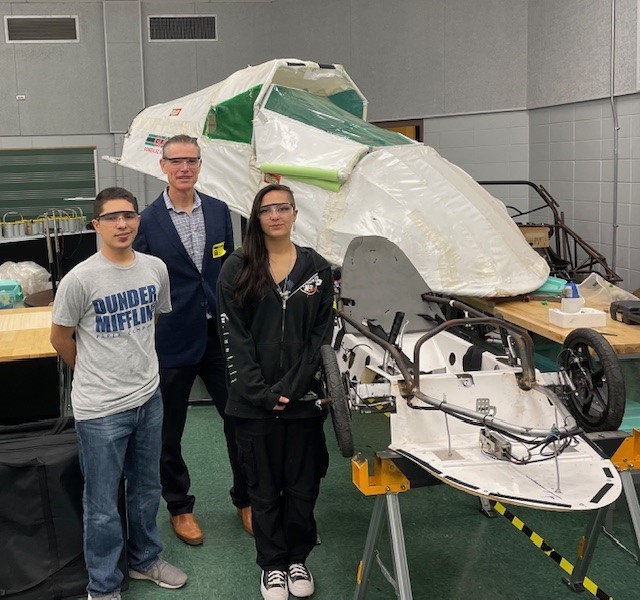
Paul Herdman with two students in their electric car design studio at a CAST School in San Antonio, TX.


The U.S. Career Pathways Story: Federal Inspiration, Local Innovation

In the last decade, the United States has seen a massive shift in the national consciousness around college and careers. Many of us in the education reform community were focused on a “Bachelor’s or Bust” mentality. That is, that the attainment of a four-year degree was the only bar to shoot for; anything less was seen as selling our kids short. A few shifts have started to change mindsets:

  • Cost. While having a four-year degree or more is still helpful in the labor market, college costs and related debt have made four-year degrees less attractive. (See McKinsey analysis here.)
  • Options. The labor market has evolved such that in addition to high-skill, high-wage jobs and low-skill, low-wage jobs, there is a growing “middle-skill” sector of good jobs in IT, healthcare or advanced manufacturing that have good compensation and career trajectories, and require some education and training beyond high school, but not four years. (See more on this from Bob Schwartz.)
  • Investments. Philanthropy, employers, and national (federal) and sub-national (state and local) government have invested in the idea of blending real-life, career-connected learning into the general education system. The reason? A growing awareness of the gap between what employers need and what young people are getting in secondary school. (See Jobs for the Future’s “The Big Blur” for more and OECD longitudinal analysis.)


While much has been written on this topic (see resources below), this post, in the context of our OECD study of five Anglophone countries, will attempt to provide a backdrop on what was happening at the federal level in the U.S. over the last several decades to help catalyze this shift in career pathways and offer a snapshot of how this work is evolving in two very different statesDelaware and Texas.

With over 330 million people spread across 50 states, this is a story of local innovation inspired by a federal framework. To understand what’s happening in each of the states, it’s helpful to understand how education policy decisions are made in the U.S.

Federal versus local decision-making. To start, the U.S. Constitution was silent on the role of the federal government in public education when it was signed in 1787. Eighty years later, in 1867, a U.S. Department of Education was established with a staff of four to capture statistics on how the nation’s students were doing. Today, 150 years later, after increased funding for low-income students in the 1960s, and deep investments to increase equity of access based on race, gender, ability, and language status in the 1970s, this federal agency, while still the smallest cabinet-level agency, has over 4,400 staff and an annual budget of about $68 billion USD.

That said, the influence of the federal government on how states and localities educate their children is limited. In terms of every dollar spent on a public school in the U.S., only about seven to 10 cents comes from the feds with the remainder largely split, about 47 to 45 percent, between local and state, respectively. This bent toward local control is compounded by the fact that these schools are governed by over 20,000 local education agencies (about 13,300 school districts and 7,800 charter schools). In short, the system is designed to put decision-making in the hands of locals. In theory, this creates a very responsive system, but it also contributes to a highly variable one in terms of strategies and outcomes.

When it comes to connecting work-based learning with general education, one could argue that its origins have been around for a couple centuries. The closest forerunners to today’s career pathways are Career Academies, which were started in the late 1960s in Philadelphia and expanded significantly in the ‘80s through organizations like National Academy Foundation (NAF). Like the career pathways of today, they blended career education with meaningful work-based learning, but they tended to comprise small learning communities within schools, while today’s career pathways tend to incorporate early college access, be offered schoolwide and be more embedded in statewide strategies.

Building on the Carl D. Perkins Act of 1984, a federal act that provides funding for career and technical education to secondary and post-secondary institutions to prepare students for the workforce, in 2014, a federal Working Group was created to deepen this effort. Consisting of the White House National Economic Council, the Office of Management and Budget, and 13 federal agencies (including Education and Labor), this group informed the definition of a career pathways system with the signing of the Workforce Innovation and Opportunity Act (WIOA). This framing and an initial national investment of about $2.4 billion USD helped catalyze action across the states.

Delaware. In Delaware in 2014, local leaders were still recovering from the economic crisis of 2009 and had growing concerns about the disconnect between young people graduating high school and the world of work that awaited them.

In response to concerns of then-Governor Jack Markell and influential business leaders, namely members of the Delaware Business Roundtable Education Committee (DBREC), delegations of Delawareans started to visit and learn from countries like Singapore, Switzerland and Germany that were doing a better job of blending education and workforce development.

In 2015, Governor Markell put a stake in the ground with his Delaware Promise to ensure that 65 percent of 25–34 year-olds in Delaware had a degree or certification by 2025.

There was already a pilot program in which 27 students at the state’s largest high school were learning about Advanced Manufacturing through a partnership with a local community college and a growing energy company. The idea had promise and significant room to grow.

Luke Rhine, Delaware’s Director of Career and Technical education at the time who joined me as a part of the Switzerland delegation (and is now a Deputy Assistant Secretary in the U.S. Department of Education), shared the following on those origins:

Many of the folks leading the charge in the state wanted to ensure that we were benchmarking ourselves against those that were leading internationally and not just nationally. So, from day one, I have always enjoyed the perspective that we want to be the best in the world, not the best in our given region.Interview, August 2023

Over the next decade, a mix of public and private players worked together to develop a common vision for what a comprehensive system of career pathways could look like. In partnership with the Pathways to Prosperity Network, a national partnership with Harvard University and Jobs for the Future, Delaware created a common strategic plan and worked across industries through a cross-sector steering committee to implement the plan. (For more details, see Bellwether Education Partners’ Policy Playbook on Delaware that articulates seven strategies to create, implement, scale and sustain career pathways here.)

There were several key inflection points in the growth of the career pathways movement in Delaware:

  • Initial catalytic investments from national philanthropy: Investment company JP Morgan Chase and national foundation Bloomberg Philanthropies helped Delaware launch a statewide Office of Work-Based Learning within Delaware Technical Community College and, in addition to supporting pathways broadly, helped the state build out more immersive pathways in healthcare, much of which is now supported by state funding.
  • Braided funding from the Department of Education involved aligning the metrics for all the federal funds that typically go to the schools with siloed, discreet reporting requirements. By aligning those funds around common metrics, more dollars were available to schools, and the DOE then worked with each district or charter school to implement the state-approved career pathways model in a simple-to-implement structure.
  • Pathways 2.0 was launched in 2021. Amid COVID-19, when the potential for pathways to stall because students couldn’t be in school or work placements, Rodel worked with several national foundations (Bloomberg Philanthropies, Walton Family Foundation, and American Student Assistance) to secure $7.5 million USD against a $15 million USD plan for 2022-25, for which current Governor John Carney invested the remaining $7.5 million with federal American Rescue Plan dollars. This enabled the state to start pathways earlier in the middle grades; go deeper with employers by launching the new Tech Council of Delaware (TCD) to better link young people with the growing tech sector; and go faster with the acceleration of apprenticeships. (See full case study here.)


In 10 years, Delaware has grown from that pilot of 27 students in one pathway to over 30,000 students or close to 70 percent of its secondary students in 24 career pathways that involve a meaningful work-based learning experience, a cluster of three career and technical courses, industry-recognized credentials, and access to postsecondary courses.

While every high school in the state now offers career pathways, the challenge going forward is to build the policies and systems to continue to equitably scale and sustain the work.

Texas. In Texas, a mix of philanthropic investments was also catalytic to piloting some innovative approaches, and those ideas were scaled with some thoughtful legislative actions.

Back in 2003, the Bill and Melinda Gates Foundation in Seattle, Washington, helped create the Texas High School Project at the Texas Community Foundation. (See more on the THSP here.)  These efforts led to new partnerships among high schools and higher education institutions called “early college high schools.” The initial motivation behind ECHS’s was the need to address the declining graduation rates for Texas high school students, as well as the low percentage of minority, low-income, and first-generation students earning higher education degrees or credentials.

In 2010, the THSP relaunched as Educate Texas to better represent the broader scope of work needed to improve the system. Similar to the Delaware Promise, and inspired by the Texas Higher Education Coordinating Board’s 60X30 plan (2015), Educate Texas worked with the state to achieve their collective goal of 60 percent of Texan 25–34-year-olds holding a degree or credential by 2030.

To help meet this goal, Educate Texas partnered with a cross-section of leaders to expand the P-TECH model, or Pathways in Technology Early College High School (a model started in New York City in 2011). This involved building formal, three-way partnerships with employers, high schools, and higher education partners. The primary focus of these partnerships was to work with high-need students and connect them to high demand occupations, particularly in Science, Technology, Engineering and Math (STEM).

The first P-TECH school in Texas was started in 2016, and today, just eight years later, there are 276 (and 236 ECHS). Because there are more than 5.5 million students in Texas, the student population served by P-TECH schools is less than five percent, but the question remains, how did the model grow so fast?

While there are likely several drivers, one appears to be that legislators have leveraged the proof points established by philanthropic investment into legislative actions.

Ryan Franklin, Senior Director for Policy and Advocacy at Educate Texas described it this way,

One of the things Texas has done well over time is support the front end of legislation and then reward the back end as a way of sustaining it. For example, the legislature will do things to invest in technical assistance on the front end and a state investment might pair with a philanthropic investment to expand it. Multiple systems coming together are so necessary to making a change.Interview, February 2024

This has played out in several laws:

  • House Bill (HB) 3 (2019), which incentivized college, career and military outcomes at the high school level and provided support and funding for the creation of P-TECH schools
  • HB8 (2023), which changes how community colleges are funded around similar outcomes
  • HB2209, which codified funding to incentivize the creation of new pathways partnerships in rural communities known as Rural School Innovation Zones


That said, Ryan shared that there’s still work ahead. He stated that, “while the legislation of the last several years has moved us forward, there are still some efforts needed to better align the outcomes between secondary and postsecondary education.” (Interview February 2024)

Big picture. While the federal government has significant influence through a range of investments like Perkins, Pell and WIOA, and a coherent, four-part federal strategy called Unlocking Career Success, federal funds are typically dwarfed by the state and local funds going to educate American students. As Amy Loyd, Assistant Secretary of Education at the Office of Career Technical and Adult Education, at the U.S. Department of Education shared with me in an interview in August 2023:

It’s fascinating to see how different states engage in the work. Education in the United States is almost entirely the purview of states to determine. States hold the reins in our education system.Interview, August 2023

As I step back and look at how the U.S. compares to the other four Anglophone countries in this study, three differences stand out.

Secondary and postsecondary education are more blended. One, with the exception of a growing “dual credit” effort in Canada, the career pathways effort in American senior secondary schools has intentionally been integrated into credentialing and credit attainment in higher education much more so than the other countries. Given that 72 percent of the jobs in the U.S. will require education or training beyond high school by 2031, this seems appropriate.

Philanthropy plays a much bigger role. Two, as stated above, not only does governance tend to differ in the U.S. by encouraging more local control than countries with heavier national influence like Scotland, but philanthropy doubles down on the variability by investing in many innovative new approaches. With more than 119,000 private grantmaking institutions in the U.S. collectively giving out close to $34 billion USD a year* to education in no particular way other than the subjective determinations of those grantmakers, it’s not surprising that the U.S. produces a lot of creative pilots. Where the U.S. tends to struggle is taking those ideas to scale.

Intermediaries are critical to connecting the dots. And third, this set of conditions has likely contributed to the importance of “intermediaries” at multiple levels. While all five of the countries in this study had organizations that served to connect the schools, employers and higher education partners, the funds for these efforts in the countries other than the U.S. largely came from the public sector and were therefore consistent within a given jurisdiction.

In contrast, in the U.S., intermediaries tend to largely be funded by a mix of public and private sector funds, and they exist at multiple levels. At the state level, Educate Texas, Rodel and Delaware’s Office of Work-Based Learning connect the dots among national and local funders, build relationships with employers and school districts, and also help advocate for systemic change. Local or regional intermediaries, like the Rural Schools Innovation Zone in South Texas or Code Differently in Delaware can connect employers with schools, manage work-placements, and in some cases, serve as the employer of record. Collectively, these state and local entities attempt to create seamless experiences for students from high school to higher education and a career.

National intermediaries also play a critical role by networking across regions and states. Through organizations like Pathways to Prosperity Network, Strada, Policy Innovators in Education Network, Grantmakers For Education, Jobs for the Future or Education Strategy Group, the U.S. works to accelerate our collective learning curve and stitch together a patchwork quilt of a national strategy. It’s colorful and creative, producing a lot of inspired and smart approaches, but coherent and aligned, it is not.

A U.S. challenge and a two trillion-dollar opportunity. The inherent structural challenge in the U.S. is that it is designed to be controlled locally and therefore filled with many small-scale innovations, but slow to make fundamental, systemic changes.

However, since 2020 in response to climate change, concerns about global competitiveness, and an aging infrastructure, there are over two trillion in USD going into a range of new efforts to reduce carbon emissions, like investments in clean Hydrogen hubs and electric vehicle charging stations, as well as investments in infrastructure  and efforts to improve our global competitiveness such as new investments to build semiconductors. Across all these investments, workforce training is required, and the people needed to do the work are simply not yet there at the scale needed. This represents a big opportunity to accelerate U.S. career pathways efforts. If some states can build the policies and systems needed to seamlessly connect the interests of secondary students to these high demand fields, we could see a large-scale shift in how Americans navigate from school to a career.

. . .


*Candid (2024). Foundation Directory. Numbers based on data from 2014 to 2024. Retrieved April 12, 2024 from https://fconline.foundationcenter.org. Candid compiles its data from multiple sources including IRS information returns (Forms 990 and 990-PF), grantmaker websites, and annual reports: https://help.candid.org/s/article/Where-does-Candid-get-its-data.

Resources: For more in-depth analysis of career pathways in the U.S., please see the following resources.

The Big Blur: An Argument for Erasing the Boundaries Between High School, College, and Careers —and Creating One New System That Works for Everyone, Jobs for the Future

Learning for Careers: The Pathways to Prosperity Network a recent book by Nancy Hoffman and Bob Schwartz

A case study on Delaware’s Career Pathways: Scaling Opportunity: A Case Study on Delaware Pathways, Bellwether

A case study on the Rural Innovation Zone in Texas: PPI_Reinventing-Rural-Education.pdf (progressivepolicy.org)