
What Are Delaware Students Saying About School Funding?
It’s what you do with the money that matters.Delaware student
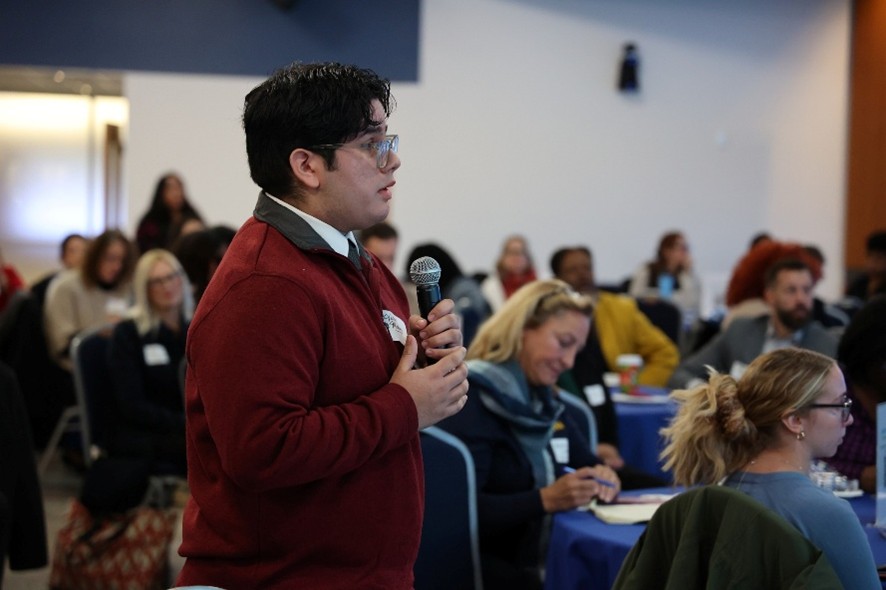
In December, more than 150 community leaders, students, parents, educators, and advocates gathered with the Vision Coalition to continue a statewide conversation about Delaware’s school funding system.
From the Delaware Technical Community College Dover campus, participants heard updates on the work of the Public Education Funding Commission (PEFC) and its proposed new funding model, along with perspectives from national experts on how states are approaching school funding reform as they move from design to public engagement and implementation.
Importantly, the conversation also centered student voices. Delaware students in attendance shared about how school funding affects their daily experiences. Their responses offer timely insight as the state considers changes to how education resources are allocated.
Below are just a few key themes that emerged from what students shared.
Students support directing resources to those with the greatest needs
Students consistently emphasized the importance of recognizing that not all students start from the same place academically—and that school funding should account for those differences. Many pointed to historically underserved groups, including multilingual learners and students from low-income backgrounds, as needing additional, targeted support.
Others highlighted the importance supporting multilingual learner (MLL) students specifically, the fastest-growing student demographic in the state encompassing more than 18,000 students statewide.
Funding decisions shape classes, programs, and opportunities
Students drew clear connections between school funding levels and what is available to them in their schools—from course offerings and extracurriculars to class sizes and technology.
Several students noted that when funding is constrained, the impacts are felt quickly and directly.
Students experience a gap between proposed solutions and school realities
While students appreciated being included in conversations about school funding, many described a disconnect between the solutions proposed by adults and the challenges students experience day to day.
Mental health support is closely tied to funding
Mental health emerged as a recurring theme across student responses. Students described how limited funding can strain relationships, reduce access to counseling and support staff, and contribute to stress and burnout.
Students emphasized that funding decisions influence not only academic resources, but also the conditions needed for students to feel supported and connected.
More insights from students
- Engagement and behavior: Under-resourced schools can lead to less engaging learning environments, which students linked to disengagement and behavioral challenges.
- Differences between communities: Students were aware of disparities in resources between schools serving higher- and lower-income communities.
- Preparation for what comes next: Many students asked for funding to support AP and dual enrollment courses, college and career preparation, internships, job shadowing, and practical clubs.
As Delaware continues to examine its school funding system through the PEFC and the ongoing legislative session, students are offering clear and thoughtful input. They recognize that funding alone is not a solution, but that how resources are allocated—and whether student experiences inform those decisions—matters.
Related Topics: air report, delaware property tax, delaware school funding, federal education funding, pefc, public education funding commission, student success, vision coalition